
Filha Hildegarda
The Liturgical Year
Various musings on the Mass Propers and Readings throughout the year, including feast days.
8th Sunday After Pentecost: Sin Breeds Contempt
Introit: Psalm 47:10-11
Lesson: Romans 8:12-17
Gospel: Luke 16:1-9
Communion Antiphon: Psalm 33:9
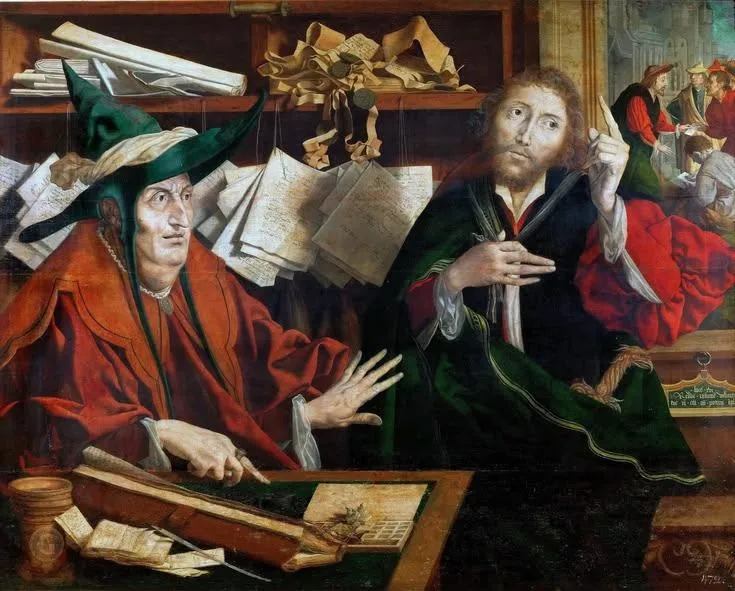
On this 8th Sunday after Pentecost, we encounter the parable of the dishonest servant which, for some, may be tad confusing to reflect on at first glance. Here, Jesus sets the scene: a servant was said to have acquired such a reputation for his devious ways so much so that his dismissal was imminent. His master had already told him to “make an accounting” of his stewardship, mayhap, as a sort of transition so as this servant in question should then prepare himself for the inevitable. Nonetheless, crafty as he is, he began to save face of sorts: through pretence–summoning his master’s debtors to discuss financial obligations while assuming a demeanour of being seemingly desirous to help–he then strikes agreements about “releasing” these individuals from debt but through fraudulent means. While this move may appear as rather advantageous–a win-win for both the master and his wily steward as debts were paid efficiently, while the said steward accomplishing a form of a crude redemption arc from his soiled reputation–the end does not justify the means. The fact remains that the master still is short-changed, and the steward becomes even more willing to embody his own dishonesty and harden his heart from the promptings of his conscience.
From this we recall the Lesson, taken from the Epistle of Saint Paul to the Romans: when we set aside and reject the inclinations of the flesh, we gain life instead of death. Unfortunately, for the steward, he continues to choose his froward ways instead of reconciling with truth: this, as we all know, would eventually lead to destruction rather then favour.
At this we look at our own lives: how many times have we sided with iniquity rather than the freedom offered to us by God? As much as sin can offer us temporary assurances of our own wrongful actions, this would plague our conscience in the end. We are then enslaved by our own innermost regrets, with a possibility for hardening our hearts even further against Wisdom’s admonitions. This, for the most part, poses a greater risk: we then take upon ourselves a willingness to defy the Divine Law until our heart hardens, just like how Pharaoh’s obstinacy against letting the children of Israel go is a reflection of his persistence in choosing a contrarian stance against God’s will.
Let not ourselves be fooled by the trappings of a false sense of spiritual and temporal security. We are free to choose between sin (death) and righteousness (life). The blue pill or the red pill? Life or death? As the prophet Moses writes, “I call heaven and earth to witness this day, that I have set before you life and death, blessing and cursing. Choose therefore life, that both thou and thy seed may live.” (Deuteronomy 30:19).
+U.I.O.G.D.
7th Sunday After Pentecost: Not What It Seems
Introit: Psalm 46:2
Lesson: Romans 6:19-23
Gradual: Ps 33:12, 6
Gospel: Matt 7:15-21
Communion: Psalm 30:3
Sometimes our lives is a paradox of what we are and who we project to be–in which case, it has become all too common to see people feasting on others’ faults when they learn of façades crumbling and disintegrating, as if crucifying hypocrites is justice personified. Well, this may be perceived to be entirely reasonable at face value, given that when one dares to portray someone they are not is synonymous to deception, a scheme to redeem oneself from open shame yet not with sincere reparation but of beguilement. What is more remarkable about this phenomenon, though, is the sheer mettle of just about anyone to point their fingers at their neighbour to be the most fraudulent individual they have ever met, sometimes even pathologising them to be mentally unwell through various psychology-related terminologies that abound with even more nuances regarding such a subject (but relatively ignored unless it suited their mindsets). Especially now in this modern era spurred on by the age of information, social media has become replete with users who comment on just about everything and anything, acting as infallible judges of character whose credentials do not have any sort of traction to do so, save for the fact they have have created an account for free together with the knowledge of exploiting any freedoms of expression they believe they ought to be entitled to. Hence, the world becomes louder and noisier, notwithstanding the natural law and the reality of human weaknesses, as it plunges more into the depths of human banality manifested by people constantly clamouring for truth and the authentic life yet fail to acknowledge their own inner maledictions, i.e., the dirt of the human soul.
It has been read time and again in the letter to the Romans where St. Paul talks about the sin of Adam entering into the world thereby corrupting both the inner man and the physical aspect of the human person. This sense of humanity’s fallen nature is highlighted even more in our reading of this Sunday’s Epistle: for as you yielded your members as slaves of uncleanness and iniquity unto iniquity, so now yield your members as slaves of justice unto sanctification. For when you were slaves of sin, you were free as regards justice. During the Fall, our first parents succumbed to the devil’s deception which then paved the way for Death’s hold upon the soul. We then fell into the trap of vice and sin, valuing the lower passions instead of an intellect oriented towards the Divine. Consequentially, we became more open to falsehood rather than truth, to a fraudulent perception of ourselves as perfect in contrast to the realities of our own defects. Saint Paul similarly emphasized this in one of his letters to the Thessalonians where he gave a brutal exposition of humans enslaved by sin: And in all seduction of iniquity to them that perish; because they receive not the love of the truth, that they might be saved (2 Thessalonians 2:10).
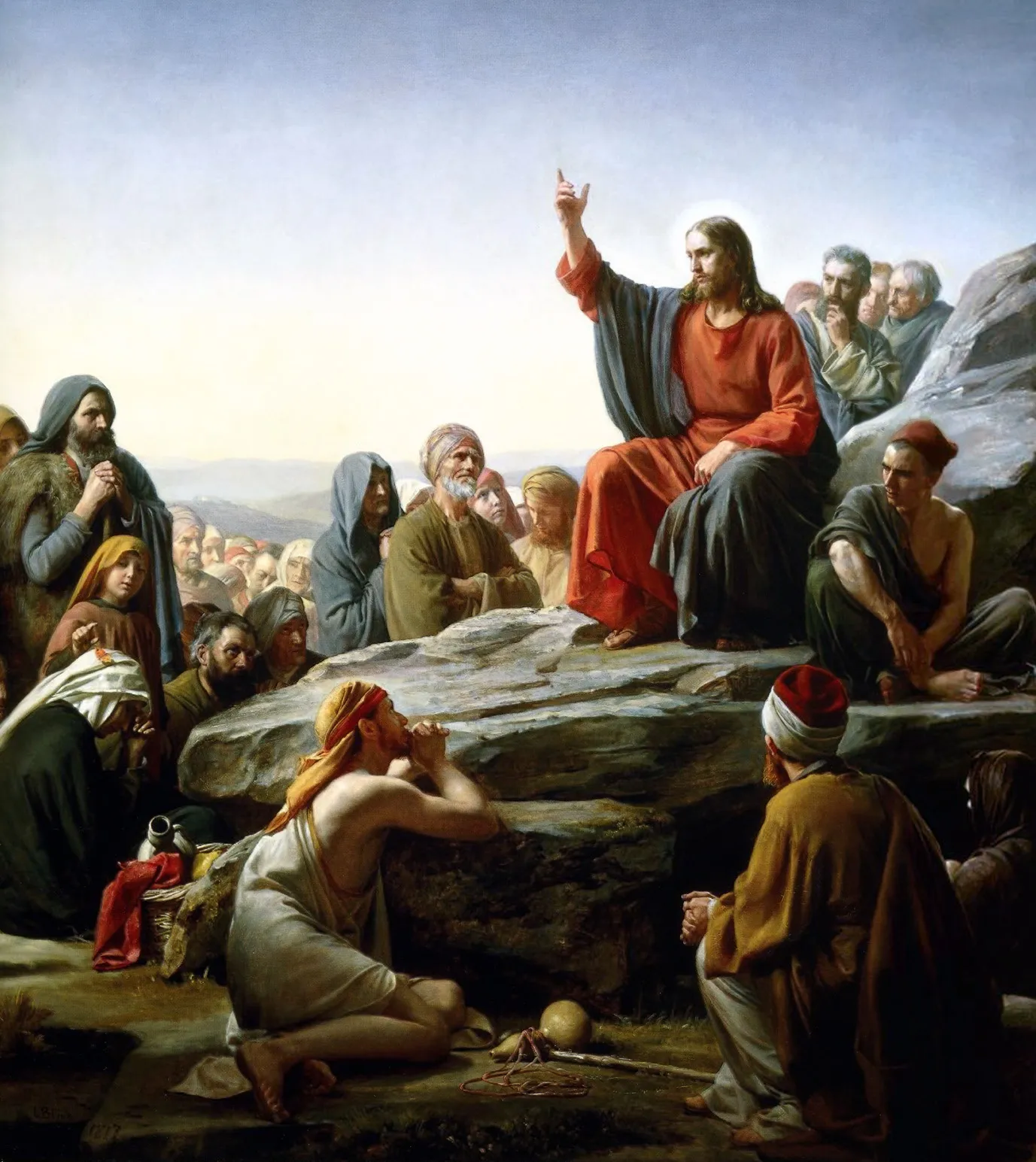
Now, in the Gospel, Our Lord gives a more practical illustration about those who portray themselves as pristine vessels entitled to the indwelling of God’s inspirations in their souls but in reality are soiled, depraved, and spiritually despicable. What makes matters worse is that these very same people are those who love, more than anything else, to exhibit such perceptions of worthiness to God that they end up forgetting how they have been broken by their own spiritual, moral, and temporal deficits. Jesus describes them aptly: false prophets dressed as sheep’s clothing, as though they could forever hide from accountability while playing the role of benevolence and virtue. In this, He provides us with a determiner: A good tree cannot bear bad fruit, nor can a bad tree bear good fruit. Anyone can claim to be a Christian but be callous enough to slack off in his or her responsibilities to cultivate an edified spiritual life and be a hypocrite instead. As much as God is the ultimate good, He cannot be mocked by implying that He can forgo rightful judgment just because of His all-encompassing mercy. The Prophet Jeremiah impeccably sums this up: I am the Lord who search the heart and prove the reins: who give to every one according to his way, and according to the fruit of his devices. (Jeremiah 17:10)
We should be nothing more or less than God’s children; therefore, let us rid ourselves of the trappings of guile. We must be the salt of the earth and the light of the world, and we shall never fulfill being such if we merely seek privilege and adulation through adorning ourselves with multiple masks.
6th Sunday After Pentecost: Our Lord Sustains Us
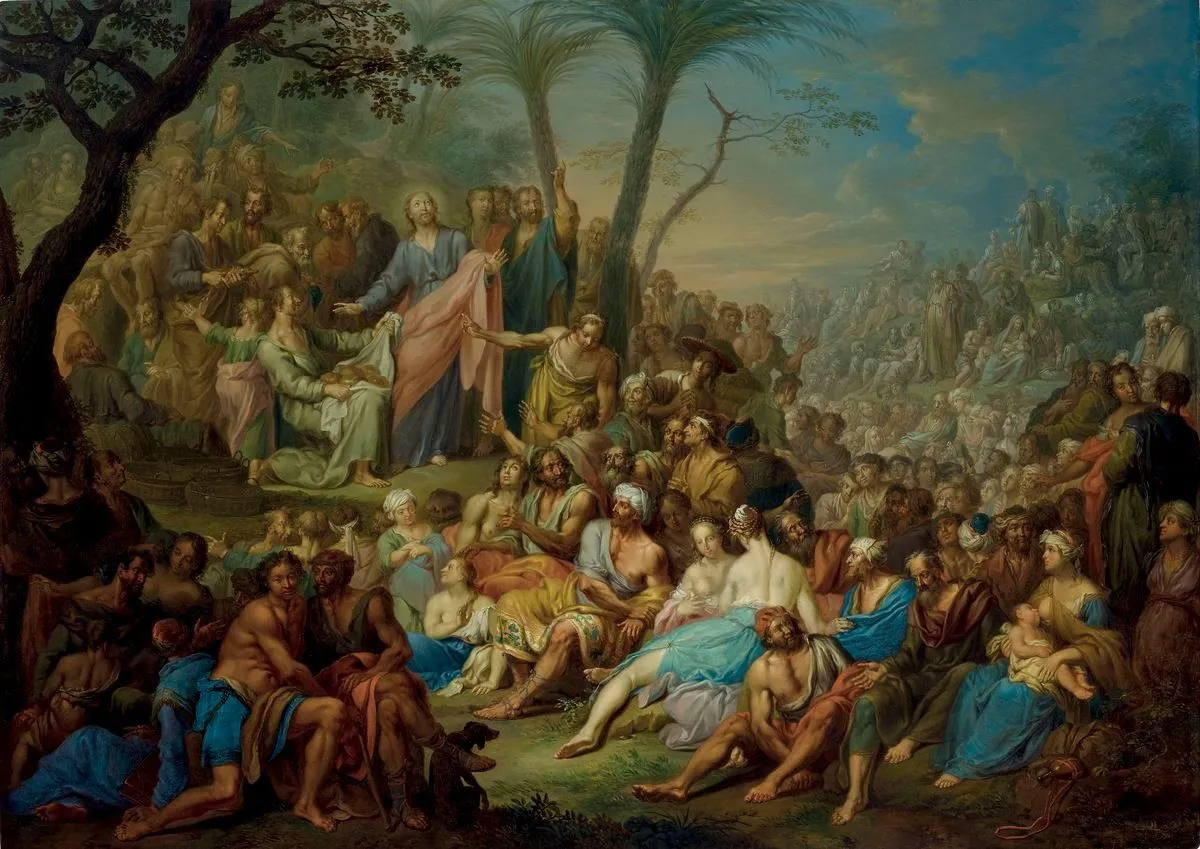
For the Gospel on this sixth Sunday after Pentecost, Our Lord feeds the hungry multitude who have come to Him to hear the Gospel. Hundreds—even thousands—of people gathered to hearken unto Jesus speak of the Kingdom of Heaven: men, women and their children, and perhaps even those whose curiosities could not keep them from beholding the Christ from afar. Some could even have been doubters who merely take this as an opportunity to filter out supposed contradictions to an otherwise consistent message of salvation and truth. Yet, whatever their states of life may be, they were all there—a massive crowd, with various experiences, problems, concerns, situations.
The God-Man, in His human and Divine nature, understood full well that despite He, as the Bread from Heaven, the Nourisher of souls, should also give way to the inclinations and needs of mortal men; thus, He asks whether the crowd may be able to eat, thence satiating their need for sustenance that have been wanting for three days. The marketplace is far off: each of these should trudge by foot all the way into the cities just so they could have their fill of food and drink. It poses such an inconvenience indeed, especially with little ones in tow; then, as they return for the culmination of Our Lord’s preaching, it would belabour them anew. At this, Jesus had willed in Himself to make the people rest: food shall be provided, God shall work a miracle today.
In retrospect (and if we should place ourselves in the shoes of the gathered assembly), it might have seemed normal to us to have food served freely, as is conceivably due. We could have plainly taken our food, given thanks for the hearty meal, and gone along our way without thinking twice as to where it came from. Moreover, we would have never suspected that a miracle had taken place, as the process through which it was undertaken was not divulged nor gossiped about. Our sustenance was as quiet and simple as something borne out of the ordinary; yet, unbeknownst to our most finite minds, the Lord has already nurtured both our bodies and our souls.
Isn’t it the Eucharist similar to this? Whenever we assist at Mass, all we behold in our presence is bread and wine in its physical accidents: nothing extraordinary seems to be taking place yet through Transubstantiation, matter becomes Our Lord’s true Body and Blood. As we then partake of this, we do not only receive the tangible but God Himself who loves us and wills us to be saved. Quietly, among the most inaudible parts of the Mass, Our Lord manifests Himself and dispenses His gentle care unto us—that through receiving Him, grace lifts our souls and makes us united unto Him.
Verily enough: as Christ Himself had said, “Man does not live by bread alone”, we are called to remember that our tangible nature is not the pinnacle of our existence. We were created to be sustained, not merely by mammon, but also God Himself. He is the water of life and He is the bread of heaven; and we, who sigh—poor children of Eve—hope and exist through His ineffable Love in the Eucharist.
In the Mass, the testimony of God’s Love, we find our solace and rest.